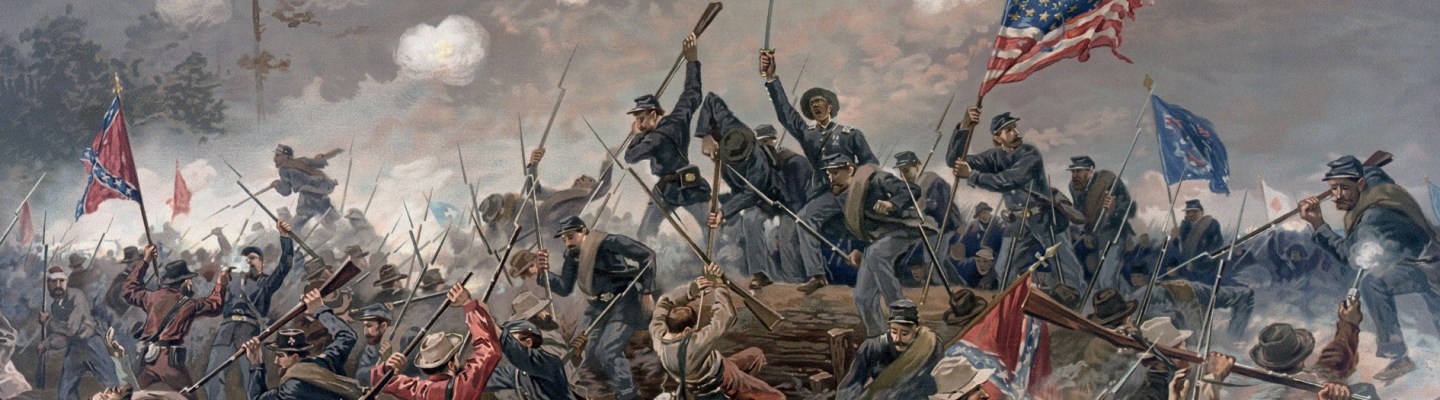


Galveston, Texas, a.d. 1865, the 19th day of June—the U.S. army general Gordon Granger arrives to enforce the president’s decree. Two and a half weeks prior, the western army of the trans-Mississippi, the final major holdout of Confederate insurrection, gave up at last. Two months have already passed since the traitor Robert Lee tendered his surrender at the Appomattox courthouse; but the status of the Africans held as chattels by white citizens remains in limbo. By order of the Union commander-in-chief, lately felled by an assassin’s bullet, all persons enslaved in rebel territory are, speaking legally, already free. But it will take the presence of federal troops to make the president’s order more than ink on paper, scribbled on some desk in Washington, D.C. And so the general has arrived to extend the emancipation proclamation to the western reach of the slaveocracy—rounding off the largest wartime seizure of private property.
Neither Lincoln’s proclamation nor Granger’s order of June 19 will achieve an actual end to human slavery. In fact, they leave untouched the legal status of those enslaved in states still loyal to the Union. Even the announcement of general Granger, printed in the next day’s news, comes with the not-so-cheery admonition that the now-free Texan blacks ought to remain on their ex-masters’ property, to “work for wages,” and to refrain from any “idleness.” The abolition of slavery, considered properly, does not come by a military order for property requisition, but through amendment of the national constitution to eliminate the very notion of human property. Still, the date of June 19, more for its symbolism than anything, will come down to be commemorated as the watershed in history for the long-delayed unshackling of black slaves. In 2020, amid widespread public protest following the state-sponsored murder of George Floyd, both then-president Donald Trump and his contender, now-president Joseph Biden, pay respects (in their own ways) to the “Juneteenth” holiday tradition, with the former claiming credit for making “very famous” a celebration that “nobody had ever heard of,” to the great delight (one must imagine) of those whose ancestors might have felt a comparable elation at the news from general Granger that they’d been freedmen, without knowing it, all along.
In what way is Juneteenth, as its official name suggests, a sort of “second” or “alternative” independence day? There’s always been something off, if not grotesque, about the first one; that is, a day to mark the birth of the “land of the free” at a time when one person in five was in captivity. This skepticism was voiced most famously, as well as eloquently and powerfully, by the abolitionist Frederick Douglass, in his 1852 speech “The Meaning of the Fourth of July for the Negro.” But those who like to quote this speech to poo-poo family barbeques each summer may do well actually to read it: Douglass didn’t quite take issue with the American revolution, nor with the republic’s founding declaration (whose “eternal principles” he praised as “saving principles,” to be stood-by “on all occasions, in all places, against all foes, and at whatever cost”), so much as with the gross hypocrisy of a country whose just ideals are that but only just. His was an account not of denial, but disappointment—not of rejection, but redemption—hoping against hope that the U.S. one day would make good on what he considered its founding promise; a nation that, as his friend Lincoln later put it, had been “conceived in Liberty, and dedicated to the proposition that all men are created equal.”
Decades of anti-slavery agitation and abolitionist activism, not to mention the radicalizing effects of civil war, helped to transform the preamble of Thomas Jefferson’s declaration of independence into something like a national mission statement. Yet at the time of its hancocking, it wasn’t clear that this was so. The declaration was not intended as a binding charter of legal rights, but simply as the colonial delegates’ explanation for withdrawing their allegiance from the British crown, to seek the friendship (and naval weaponry) of the thrones of France and Spain. The claim that all men are created free and equal was conventional wisdom to English whigs, including in the aristocracy, and it referred to man in a “state of nature,” before civil society was established; it wasn’t quite a blueprint for how civil society, once established, should be run. And while enlightened opinion among the patriots was often squeamish over slavery in principle, the acceptance of racial co-equality in a single polity was virtually unheard of. All the same, the declaration bodied forth the revolutionary principle that inequality was not natural and inevitable, but learned or imposed; and that the proper role of civil government, its sole raison d’être, was to secure man’s inborn rights under natural law.
The word “inborn” there is no throwaway, for the English world was nothing if not obsessed with blood and lineage. The hereditary principle underlay not just the monarchy and aristocracy, but the entire social frame of English feudalism, imported over the Atlantic to the new world. One’s rights and freedoms were dependent on one’s social status, and status was conditioned on one’s birth. Inequality was a given. Coercive forms of labor, extracted from subordinates, were the norm. Centuries of Anglo-Saxon struggle against absolutist monarchs, from the Normans to the Stuarts, had settled that the sovereign owed at least his Christian subjects a special duty to protect their ancestral privileges. But English law had also borrowed from medieval law of the crusades to treat non-Christian foreigners, or “infidels,” as the “perpetual enemies” of Christendom, with no rights a king was duty-bound to honor. Here then was the groundwork for a semi-feudal class society in the colonies, with imperial subjects stratified according to their parentage, on the backs of Indians and Africans born into the bottom, with the crown on top.
The restoration of Stuart rule in Britain was followed, in her colonies, by the introduction of hereditary slavery. British rule affirmed the medieval norm of Christian conquest that “infidel” slavery was perpetual and inborn: specifically, it was transmitted through the mother. This turned enslaved persons into a renewable resource, made pregnancy a profitable investment, and consigned African wombs to being factories of labor reproduction (not to mention reproductive labor). It also solidified the link between slavery and skin. Meanwhile, royal authorities vetoed local efforts to restrict the trafficking of men; made it legally impracticable, if not impossible, to liberate one’s slaves; and even incentivized the purchase both of bonded white labor and of enslaved blacks, by rewarding masters with large tracts of land, and thus with political representation. British norms of hierarchy and heredity were thus essential to colonial development, with power concentrated in the hands of an extractive and tyrannical landed gentry.
Slavery, then, was not some parochial practice cropping up on the lawless fringe of empire, but a deliberate scheme of royal and imperial design. Still, in true British fashion, it was best kept at arm’s length. The much-vaunted king’s bench decision in Somerset v. Stewart, widely known for its ringing language against the “odiousness” of slavery, is often lauded as the case that ended slavery in Britain. It really did no such thing. What Somerset stood for, in reality, was merely the proposition that a law permitting slavery wasn’t on the books in Britain; but wherever it was enshrined in law—as it was in Britain’s colonies, which British authorities made sure of—the ownership of men was fine indeed. This allowed the mother country to be untroubled by the sight of whip and shackle on her soil, while reaping handsome profits from her possessions overseas. It also implied that man-made positive law could authorize something repugnant to the very laws of nature. And it confirmed the idea that the most essential questions of rights and status—like whether one was a freeman or a slave—could vary vastly from place to place, depending on local policy: an accident not just of birth, but of geography.
These were the social and legal systems that the colonists inherited as Englishmen, and against which they, as revolutionists, rebelled. In the revolutionary period, it wasn’t uncommon for disgruntled English settlers, chafing under imperial restriction, to complain of being reduced themselves to “slavery.” “How is it,” replied the English tory Samuel Johnson, “that we hear the loudest yelps for liberty among the drivers of negroes?” But their complaints were not entirely unfounded. The majority of settlers, after all, had come to America on terms of temporary enslavement; once freed, they remained subjected to the distant and unaccountable aristocrats in parliament, and the ultimate absentee landlord in the king. Tutored in the lessons of the English civil wars, and nurtured in prior seasons of imperial neglect, the English settlers of North America had evolved a whiggish sensibility and enthusiasm for liberty. Yet “liberty” meant more to them than just the laissez-faire ideal of being left alone by government; nor was “slavery” quite reducible to cruelty and coercion. The essence of liberty was being free from arbitrary rule, however “benevolent” it might be, by having an active say in the political and economic conditions of one’s life. It was believed that traditional English privileges secured this sort of liberty as a birthright, deeded by their ancestors from Saxony, to be applied wherever Englishmen might be; the British parliament disagreed that English rights had application outside of English soil, least of all in the “infidel” territory of the colonies. The intransigence of the crown soon dispelled any illusion that George Hanover could be trusted to protect his subjects’ liberties. What began as a demand for ancestral privilege based on custom became instead a claim for rights derived from nature, the common heritage of mankind, which could be asserted anywhere and by anyone and by any means at their disposal—including by force of arms, if necessary.
Or so it was on paper. In practice, the revolutionary transformation of royal “subjects” to republican “citizens” left unresolved the question of who exactly counted as the citizenry. And the foundation of 13 independent but united sovereign states left ambiguities about which rights each citizen had and where. The revolution unloosed a surge of popular democratic movements, in particular among debt-ridden small farmers and the working classes, asserting rights in ways that colonial elites did not foresee, much less endorse. (Thomas Jefferson, approving the upheavals from afar at his new diplomatic post in Paris, where later he cheerled for the revolutionary Jacobins, was a notable exception.) Black Americans, having fought on either side of the war for independence, and many of whom were freed (or freed themselves) in the process, heeded the democratic call of a white man’s revolution whose blessings weren’t intended clearly to be shared. The meaning of the revolution was contested. The prospect of slave revolt and race-mixing and populist uprising put the ruling class on edge, fearful of the people’s zeal for liberty, so essential to the war effort, but starting then to threaten what the elites loved most of all: their property.
The constitution of 1787 was not the capstone of this revolutionary era, but more like an elite-backed, counter-revolutionary coup. It slammed the brakes on some of the more progressive efforts by the states, like sorely needed debt relief and monetary policies, and built the infrastructure for putting down people’s revolt. It enshrined an indirect and unresponsive legislature, a thoroughly unaccountable judiciary, and an executive whose energies could make the house of Hanover blush. It gave undue representation to the southern states, where a slaveholding planter class playacted as old English country gentry, and guaranteed the right of masters to recapture slaves escaping to the north. More a compact among sovereign states than a vehicle for central governance, the constitution’s main concerns were to ensure the smooth collection of debt and to safeguard property from encroachment; it mostly left internal matters to each state, for better or for worse. And so the decades after independence saw the growth and first successes of state-level abolition movements, but also a rolling-back of free black suffrage and civil liberties. Each state was free to define its citizenship and set its own voter qualifications, which hinged typically on race and sex, but more importantly on property; and the “wealth” of southern states, in the form of human chattel, swelled the slavers’ numbers in the congress. (The objectionable thing about the notorious “three-fifths clause” is not that it devalued African bodies, but that it counted slaves, and boosted masters’ power, in the first place.) Slavery, as a national enterprise, remained untouched.
The constitution did pledge the U.S. to make sure each state had a “Republican Form of Government,” and it required the states to keep some uniformity in citizens’ “Privileges and Immunities.” But how could there be any consistency when a black person might be a voting citizen in one state and a piece of property in another? The old imperial problem of blood and boundaries persisted, as did the conflict between the positive law of local jurisdictions and the universal pieties of the natural law tradition. Nor could the problem be swept under a localist “states’ rights” rug. The southern slaver class insisted on aggressive federal power to make the north bend to the laws and whims of slave states, compelling free-state governments to kidnap blacks accused of being “fugitives” and deport them south, without due process, into bondage. Slaveholders demanded the right to bring their human contraband wherever they stepped foot, notwithstanding local laws. Mob violence was deployed routinely and with impunity on abolitionists in the south, and even in the north, where federal marshals could summon posse comitatus to force all bystanders to join “slave-catching” hunts. This last point can’t be stressed enough: the southern fleshmongers relied on federal agents to force free citizens of the north to work as their personal repo men in human trafficking. The whole nation was conscripted—dare I say “enslaved”?—at the pleasure of the slaveocracy. It cast the whole divided house into ill-repute.
What kept these tensions at bay was a tenuous balance struck between the states where slavery was legal and where it wasn’t. So the U.S. expansion westward into territories purchased from Napoléon made the slavery issue all the more decisive. By the time the U.S. supreme court weighed in on the question, the fault lines were irreversible and clear. The conflict wasn’t exactly that between a nationalizing north and an autonomist south—after all, the anti-slavery position was helped, not hurt, by state autonomy, which pro-slavery expansionism imperiled. The tendency toward nationalism was a fait accompli. The only question was what sort of nation it would be.
Would America be a republic of free citizens, or an empire of slavery? Chief justice Roger Taney chose the latter. In his infamous Scott v. Sandford opinion, Taney issued two explosive legal rulings: that black Americans had no legal rights the white man needed to respect, and thus could never be U.S. citizens; and that the ownership of men was a constitutional right which the government was powerless to infringe. In so doing, the supreme court parroted the old medieval logic of perpetual blood-borne status, while subordinating the natural law to the grotesque positive. Never was there a more stinging repudiation of Mr. Jefferson’s preamble—at least not till the Confederacy seceded. And secession from the Union was only a last-ditch effort by the losers in a struggle over the Union, once the tide seemed to be turning. (The crackpot notion that the war was fought for “states’ rights” in principle is refuted by the very first grievance in the very first declaration of secession: their gripe was that the free states had flexed their rights against pro-slavery, big-government intervention.) The slaveocracy saw a radical seed planted in the soil of their white settler republic; a seed which, if permitted to grow, might rock the edifice of their power; and thus they staked their cause to nullify and uproot it. On the occasion of the Confederacy’s adopting a (largely plagiarized) constitution, the “vice president” Alexander Stephens made no bones about what made their form of government unique. The words of Jefferson, they claimed, were “fundamentally wrong;” their society, “founded upon exactly the opposite ideas;” chattel slavery was the African’s “natural and moral condition;” and their Confederacy was built on “principles in strict conformity” with these purportedly immutable laws of god.
One may differ on whether Stephens’ words were a betrayal of the spirit of 1776, or if they were an essential ingredient baked from the beginning into the American pie. Likewise, one can side with Frederick Douglass and view the original constitution as a “glorious liberty document,” which could be used to topple slavery, or join the radical abolitionist William Garrison who agreed, oddly enough, with John Calhoun and Roger Taney that the text was a slaver’s charter from the start. In the antebellum period, these things were vigorously contested. And it was through that contestation that meaning was defined. The high court of Massachusetts, reading the words “all men are born free and equal” inscribed into its state constitution, held that slavery was “as effectively abolished as it can be.” The Virginia declaration of rights, affirming that “all men are by nature equally free,” did not yield the same result. Both interpretations of the national slogan seem to have been present at the founding, and which one was right was yet to be resolved. The revolution did not settle any answer to this question. The revolution, rather, is what posed it.
Viewed from afar, the revolution looks more like a side story in the longer and larger conflict among European powers at the contested margins of empire. What began as a gentlemen’s scuffle among the British settlers of North America, over questions of home rule and imperial war debts, led to a shift of patriot allegiance to, of all things, the hated French. Then the French, having bankrupted their treasury to help the patriots break off from the British, induced a revolutionary moment of their own. France’s revolution unleashed Napoléon across the old regimes of Europe; while in the lucrative slavers’ colony of Saint-Domingue, crown jewel of the French empire, the convulsions of the metropole were amplified and echoed in what became the most successful slave revolt in history. The establishment of a self-governing republic of former slaves sent shivers through the sclerotic spines of America’s own planter aristocracy, who began to clutch all the more tightly to their “peculiar institution.” And the loss of Saint-Domingue to the revolutionary state of Haïti forced the cash-strapped France to sell Louisiana, doubling the size of U.S. territory, and pushed the “slave question” to the unavoidable front and center. Civil war was made inevitable. The American struggle for independence was actually the start of a trans-Atlantic revolutionary wave, radicalizing in the crossing, destabilizing old regimes and clearing openings for new ones, bouncing back to its point of origin to finish off the job.
The arrival of general Granger in Galveston, Texas on the 19th day of June, 1865, was the long-delayed climax of a longer revolutionary process. All over the Atlantic, a familiar drama played out in which some general social crisis, typically over war and debt, pit various factions and classes in common cause against the established rulers; progressive gains for the lower rungs provoked tensions with the ascending middle; their conflict sharpened contradictions in the struggle to define what the revolution really means. The perennial struggle between the propertied and the propertyless was only heightened by the presence of those who were themselves possessed as property. But slavery wasn’t just a “flaw” or “defect” in an otherwise coherent American project. It had been preserved by the most reactionary and anti-democratic elements of the new republican regime, and its longevity relied on those same features being entrenched. Both the Confederacy and the Union could claim descent from the initial throb of 1776. Fraternal blood was shed not only to shape the republic’s future, but to decide what the revolution had been for to begin with. It was, in fact, a consummation of the revolution—the revolutionary overthrow of feudal despotism, oligarchy, and hereditary privilege—to settle whether there’d been a revolution, worthy of the name, at all.
But freedom did not come about by presidential decree. The emancipation of enemies’ slaves was an established wartime measure (indeed it had been utilized against the patriots by the British), conducted for reasons more militant than humane. Emancipation did not put an end to legal property in people. It would take a constitutional overhaul to dispense with coercive labor and ownership of men. And even after abolition, the mere end of chattel slavery wasn’t sufficient in itself. Hardly had the ink dried on the constitution’s 13th amendment when the “black codes” passed by southern states threatened to revive slavery in all but name. The civil rights act of 1866, passed by a radical-led congress over a presidential veto, was a necessary corrective, giving teeth and substance to abolition’s promise of “freedom” by granting blacks the rights and liberties of free citizens. Any doubts as to the constitutionality of the act, or fears that a later congress might repeal it, were foreclosed by the subsequent passage of the 14th amendment, which inscribed “liberty” and “equality” for the first time into the supreme law of the land. It’s only with the radical reworking of the U.S. constitution in the reconstruction era that the declaration’s call for human liberty, unbound by blood and borders, became a binding point of government under law.
We owe it to the radicals of the reconstruction era that such high-minded principles are even part of the national mythology. The radicalness of their vision is generally forgotten. The first section of the 14th amendment, with its vague assurances of “life” and “liberty” and “property” and “equal protection of law,” is today what commands most people’s curiosity and puzzlement. It’s typically understood that Americans’ constitutional rights are discrete legal entitlements, bequeathed to us from the “founding fathers” and their “original intentions,” or else divined in judicial fiat by the U.S. supreme court. Yet what republicans (of both the big and small-r varieties) understood was that liberty and citizenship weren’t gifts to be bestowed by the grace of benevolent white statesmen; they were, instead, activities one took part in. The scope and meaning of citizens’ liberties were to be decided democratically, not received in opaque decisions from above. The intended scheme of reconstruction, set forth in the four remaining sections of the 14th amendment, was that of a multiracial mass democracy, at both the national and local levels, in which civic life and suffrage and economic enfranchisement gave all citizens a share in popular sovereignty, as the protectors of their own liberty, through the exercise of republican self-rule.
Philadelphia, Pennsylvania, a.d. 1776, the 4th day of July—The delegates of the British colonies of North America have decided to approve a treasonous declaration that announces their independency from Britain. Thomas Jefferson, the principal draftsman, will go on to stake his legacy as the declaration’s author, but today he is a man defeated. His handiwork has been butchered by committee. In his original draft, the argument is framed with a specific logic: it begins with a statement of first principles, of “sacred & undeniable” truths, that “all men are created equal & independent;” it proceeds along a list of grievances, building steadily in severeness, to indict the British monarch of high crimes; the climactic finale of these felonies, the pièce de résistance, is powerful and poignant:
[The king] has waged cruel war against human nature itself, violating its most sacred rights of life & liberty in the persons of a distant people who never offended him, captivating & carrying them into slavery in another hemisphere, or to incur miserable death in their transportation thither. This piratical warfare, the opprobrium of infidel powers, is the warfare of the christian king of Great Britain. Determined to keep open a market where men should be bought & sold, he has prostituted his negative for suppressing every legislative attempt to prohibit or to restrain this execrable commerce . . . .
A stirring condemnation. Having premised the argument on the “sacred” truth of men’s equality and freedom, the draft spells out in no uncertain terms that Africans are included, and indicts the imperial slave trade of being both “piratical” and “infidel.” The words are loaded and intentional. Pirates were, in the parlance of the time, the “enemies of all mankind,” while the status of the infidel, as the “perpetual enemy” of Christendom, had been the legal basis of enslavement. Jefferson’s draft is a provocative reversal: it’s the king who is unchristian, for having robbed the Africans of their sacred humanity. But to appease the slaveocrats of Georgia and of South Carolina, these words are excised from the finished declaration. Jefferson must live with his vision compromised from the start. After serving out his tenure in the continental congress, he will return to Monticello, his large plantation in Virginia, where over a 100 enslaved Africans labor in his name.
The paradox of Jefferson—a liberal idealist who was also an enslaver, a radical democrat who was also of the landed gentry—is, of course, the central paradox of the American revolution. And America is nothing if not paradoxical. But the dialectic of revolution isn’t just about the coexistence of contradicting interests and ideals, but about transformation, and self-negation, over time. Jefferson would go on to be a fervent partisan for the Jacobins of France, yet he abhorred it when Jacobinism arrived in Haïti and assumed the color black. Jefferson’s party, the Democratic-Republicans, were on the vanguard of progressive and egalitarian politics, with their Federalist enemies on the rearguard of aristocracy. But it was Jeffersonian democracy that laid the groundwork for southern secession and reaction, and Hamiltonian nationalism that paved the path to reconstruction. Who would have guessed that the party of John Calhoun and the Ku Klux Klan would propel Barack Obama to the presidency? Who could foresee that the party of Thaddeus Stevens and Lyman Trumbull would lead the efforts to abolish birthright citizenship?
The Republican party’s victory in ending slavery and securing citizenship for freedmen was a triumph for revolutionary universalism. But no sooner had it been won than the forces of reaction, including the Republicans themselves, aimed their efforts at excluding immigrants from the blessings of free citizenship. Today, the systematic restriction of who counts as a “citizen” is the Republican party’s signal calling card. As for the Democrats, they have colluded with their brethren across the aisle in neutering the radical promise of reconstruction. In place of mass democracy and republican self-rule, the 14th amendment has been relegated to a tool of litigation, whereby the meaning of “freedom” is decided by the courts. What was meant to be a vehicle for democratic rule has been made a weapon to strike down democratic laws. And the chief beneficiaries of this hijacking—the odd liberal achievement notwithstanding—is the entrenchment of minority rule and private property.
But history is allergic to last words. Those who see the revolution either as an elemental triumph, or an unremitting tragedy, miss the essential drama of the story. One would do well to recall the other words of Thomas Jefferson, that “earth belongs to the living,” that revolution is each generation’s duty and inheritance. One can’t help but to discern that history is dialectical, that revolution is more a process than a singular fixed event, that a new society gestates in the body of the old.
New York, 2023.
 A E S T H E T I C I D E